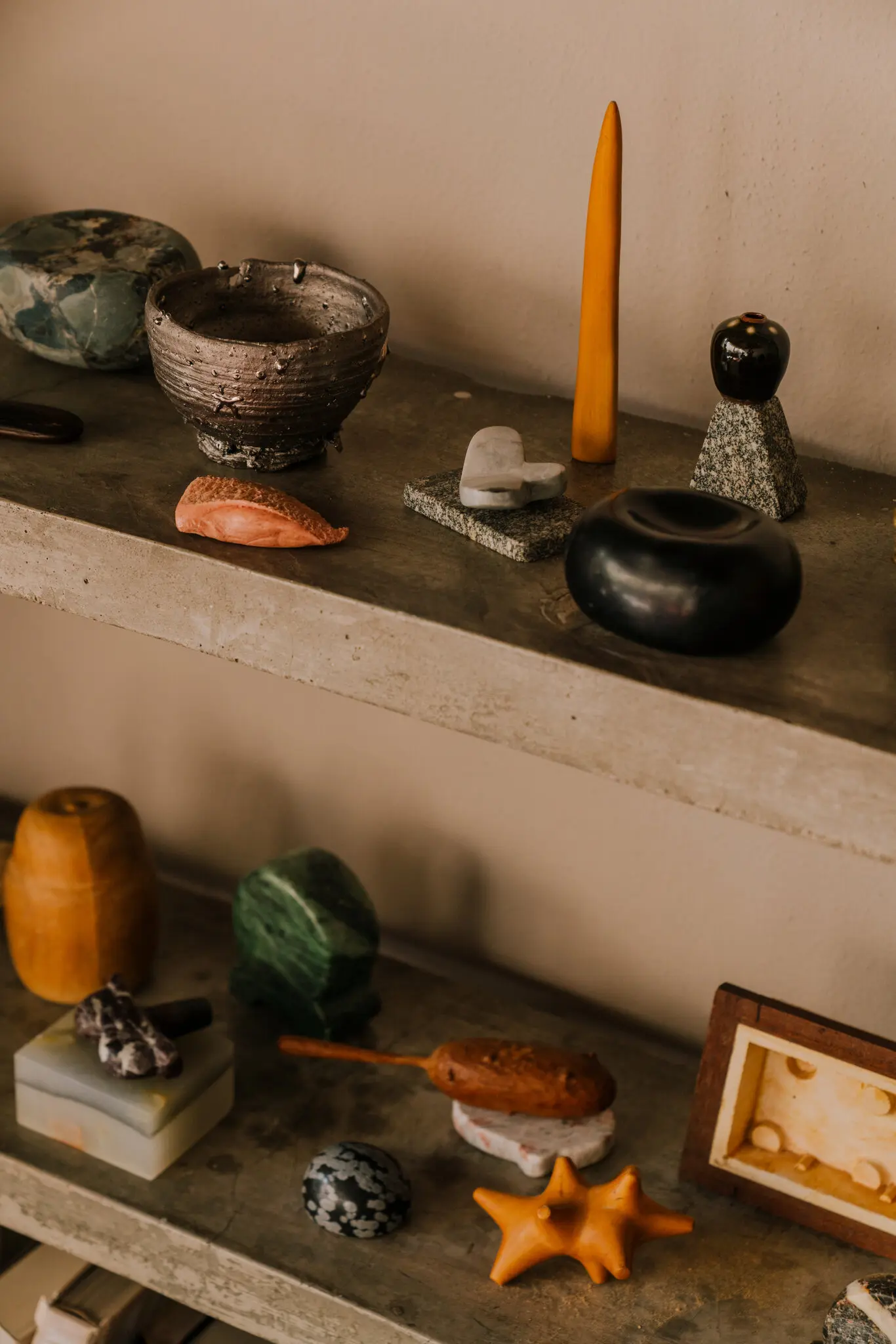
In a development that has sent palpable ripples through the uppermost echelons of the art world, the State Department has formally announced that Alma Allen, the critically acclaimed 55-year-old sculptor, will be the distinguished representative for the United States at the forthcoming 2026 Venice Biennale. This keenly anticipated revelation, arriving after a period marked by considerable uncertainty and genuine apprehension that the nation’s pavilion might remain regrettably vacant, unequivocally positions Allen as an artist of profound resonance on the international stage. The exhibition, majestically titled “Alma Allen: Call Me the Breeze” and meticulously orchestrated by the discerning curator Jeffrey Uslip, is poised to unveil nearly 30 of Allen’s deeply captivating sculptural works. The journey to this momentous selection was, by all accounts, notably circuitous, complicated by a sweeping restructuring of the selection committee, the prior nomination and subsequent withdrawal of another artist, and the unprecedented duration of a U.S. government shutdown.
During a recent candid interview, Allen, who now maintains his studio and residence in Mexico, disclosed that he had not actively pursued this prestigious commission. Instead, a fortuitous call from Uslip—a curator with whom he had no prior acquaintance—arrived in October, extending an invitation to accept one of the art world's most coveted distinctions. Allen, a native of Utah, accepted without a moment’s hesitation, even amidst whispered apprehensions from some within the art community who cautioned against association with an administration perceived as potentially inimical to artistic endeavors. While the overwhelming majority of Allen’s Venice Biennale presentation, which is slated to commence in May, will comprise existing works, the artist plans to personally underwrite the creation of a select number of new sculptures, a powerful testament to his unwavering commitment to artistic evolution throughout his career. The State Department, traditionally a more modest financial contributor to Biennale exhibitions, will generously cover the substantial costs associated with shipping and transportation, a truly crucial element in such a global undertaking.
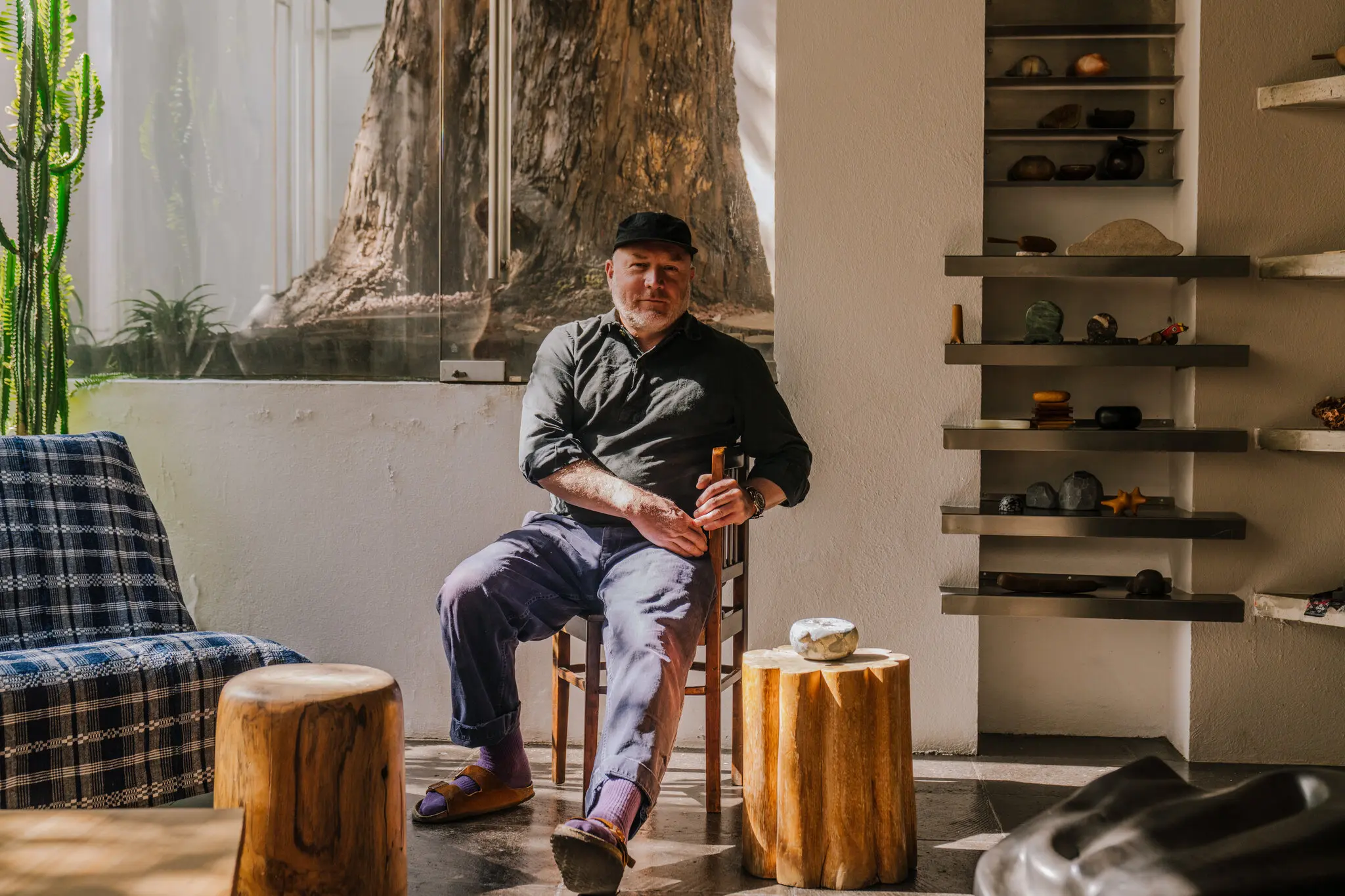
"I was informed of my approval by the State Department prior to the direct invitation," Allen remarked from his home outside Mexico City, where he has been based since 2017. "Their support thus far has been exceptional, affording me complete artistic autonomy."
Allen’s unconventional trajectory—a self-taught artist with a relatively sparse exhibition history in major U.S. museums—renders him a rather atypical choice for the U.S. Pavilion. This distinguished Palladian-style edifice, a masterpiece constructed in 1930, occupies a singularly prominent position within the Venice Biennale. Its previous occupants include an illustrious pantheon of American artistic luminaries: Robert Rauschenberg, Ed Ruscha, Jenny Holzer, Jasper Johns, and Simone Leigh, among many others. Allen’s most recent solo exhibition was held in 2023 at the Museo Anahuacalli in Mexico City. His last significant U.S. presentation involved a singular monumental sculpture at Rockefeller Center in 2022, followed by a series of equally compelling sculptures installed on Park Avenue this year. He was also prominently featured in the distinguished Whitney Biennial in 2014.
Intriguingly, Allen noted that his galleries, Mendes Wood and Olney Gleason, initially advised against accepting the Venice Biennale commission. Upon his firm decision to proceed, both galleries reportedly severed ties. (This period also coincided with President Trump’s policies impacting grants from agencies such as the National Endowment for the Arts and the National Endowment for the Humanities, alongside exerting pressure on museums and cultural institutions to modify exhibits deemed objectionable.) Both galleries subsequently confirmed to The New York Times that they are no longer representing Allen but respectfully declined to offer further explanation for their decision.
"No one has asked me to serve the Trump administration in any capacity," Allen stated, emphasizing that esteemed artists such as Leigh and Mark Bradford had participated in the Venice Biennale during the prior administration’s tenure. "I feel I am representing my country," he asserted, adding that his former galleries were "afraid of something they can’t truly define."
An Altered Selection Process
Traditionally, the State Department has entrusted the exacting process of selecting the U.S. artist for the Venice Biennale to the estimable National Endowment for the Arts (NEA). The NEA typically convenes an advisory committee composed of leading museum curators and preeminent art historians, charged with making a judicious selection from a carefully curated list of potential candidates. Successful proposals have frequently featured synergistic partnerships between the chosen artist and non-profit organizations, which undertake the considerable task of organizing the exhibition and securing its substantial funding. For instance, in 2024, artist Jeffrey Gibson collaborated with SITE Santa Fe and the Portland Art Museum for his exhibition, backed by a significant $5 million budget. (The State Department’s contribution that year amounted to $375,000, representing approximately 7.5 percent of the total cost.)
However, the NEA did not participate in this year’s selection process. A spokeswoman for the endowment attributed this to "current time constraints and staffing transitions" at both the NEA and the State Department. Consequently, the Bureau of Educational and Cultural Affairs at the State Department assumed the lead in organizing the application process. This year’s process, initiated later than usual, involved an undisclosed number of unnamed "experts in American art," and, ultimately, missed its prescribed September deadline for a decision. A State Department spokeswoman declined to provide granular details regarding this year’s specific selection protocols.
The precise manner in which Uslip became involved with the State Department on this project remains veiled. His previous role was Deputy Director of Exhibitions and Programs at the Contemporary Art Museum St. Louis until his resignation in 2016. An exhibition he organized that year featuring artist Kelley Walker, which included images of police brutality against civil rights protestors silk-screened with smeared white and dark chocolate, drew significant controversy. According to an Artnet report in 2016, some members of the Black community in St. Louis found these images to be racist, leading to vociferous calls for his dismissal. More recently, Uslip notably co-curated the Malta Pavilion at the 2022 Venice Biennale. He did not respond to requests for comment.
Just last month, State Department officials reportedly believed they were prepared to announce Robert Lazzarini, another artist of less pervasive name recognition, as the chosen representative. Lazzarini had been considered a dark horse candidate, with a limited exhibition history in American museums since his emergence in the early 2000s. Elements of his proposal, shared on his Instagram account, notably featured undulating American flags and a crumpled eagle sculpture. The State Department reportedly informed him in September of his selection, as reported by The Washington Post. However, a critical funding agreement for the exhibition between the State Department and the University of South Florida subsequently collapsed, according to John Ravenal, the curator who had initially proposed the Lazzarini exhibition. The State Department, consequently, withdrew Lazzarini’s commission before any public announcement.
"It was two bureaucracies failing to mesh," Ravenal recounted to The Post this month. Shortly thereafter, reports began to circulate that the State Department had instead chosen Allen to represent the United States, despite the sculptor having not formally applied. During this period, the federal government was undergoing a shutdown, and the State Department made no official announcement regarding the selection.
Picking Up the Pieces
In the wake of the aborted Lazzarini commission, a newly established non-profit, the American Arts Conservancy, has assumed the critical role of fundraising. This development is partly due to the decision by philanthropic partners, such as the Ford Foundation, not to support the United States’ participation in the Venice Biennale this year, contrary to their commendable past involvement. The American Arts Conservancy has declared its fundraising efforts are dedicated to "a once-in-a-generation opportunity to restore America’s artistic presence abroad while realigning its foundations at home." According to the group’s website, Jeffrey Uslip actively serves on its board of directors.
The American Arts Conservancy, based in Florida, was established this year, according to public filings with the Internal Revenue Service. Its executive director, Jenni Parido, previously operated a pet food store in Tampa, Fla., for nearly nine years, as meticulously detailed on her LinkedIn profile. "Alma Allen embodies the qualities of America’s best and brightest; he is a self-taught American success story," Parido affirmed in a news release, where she is identified as a commissioner of the exhibition. "The American Arts Conservancy is proud to share his work with audiences from around the world at the next Venice Biennale."
Allen, for his part, remains dispassionately focused on his artistic endeavor rather than the intricate financial details of his exhibition. He recently expanded his studio near Mexico City to accommodate a dedicated team of 15 employees, who will meticulously prepare the works for the Venice Biennale. He draws profound inspiration from a diverse range of sources, including the formidable French sculptor Louise Bourgeois, the esteemed artist Martin Puryear, and the enigmatic colossal Olmec heads of ancient Mexico.
"At times, my work is misconstrued as purely abstract or apolitical," he mused. "But it unequivocally represents the sum of my life's experiences." Allen departed his hometown of Heber City, Utah, as a teenager, enduring periods of homelessness and undertaking a series of arduous odd jobs—cleaning truck-stop restrooms and blast furnaces, gutting chickens, and washing dishes. Upon arriving in New York in the early 1990s, he engaged in demanding construction work, dedicating his spare moments to carving. A life-altering incident occurred in 1994 when a truck tragically struck him at the Brooklyn Navy Yard, causing severe injuries.
"I was utterly desperate," he recalled. "Penniless, on crutches. A Dominican bakery in Williamsburg generously extended me credit for rice and beans." While still on crutches, he made his way to SoHo, improvised a display with an ironing board, and began selling his meticulously carved sculptures. "Within a few weeks, I had sold everything," Allen recounted. "It irrevocably transformed my life." He confirmed that the exhibition at the U.S. Pavilion will provide a comprehensive survey of his dynamic career, including a monumental work destined for the pavilion’s central courtyard.
"To exhibit at the pavilion and represent America—there is immense power in that," Allen reflected. "I have learned that to achieve anything in life, one must embrace risk."
"This has been the rhythm of my life," he added. "There are moments of serendipity and moments of profound difficulty. And sometimes, they converge simultaneously."