Navigating Art Basel Miami Beach: An Insider's Guide
As Art Basel Miami Beach prepares to unveil its 23rd edition, uniting 283 galleries from 43 nations, prepare for an unparalleled immersion in global artistic currents. From November 30th through Sunday, a single, expansive floor plan will host this monumental event, alongside the groundbreaking debut of "Zero 10," a digital art program poised to redefine engagement with contemporary creation.
Unlike its international counterparts in Hong Kong, Paris, and Basel, Switzerland, the Miami Beach iteration of Art Basel offers a unique, sprawling intimacy. Within the Miami Beach Convention Center, a vast expanse of artistic endeavor unfolds across a single level, fostering an immediate, visceral connection to the works and their discerning audience.
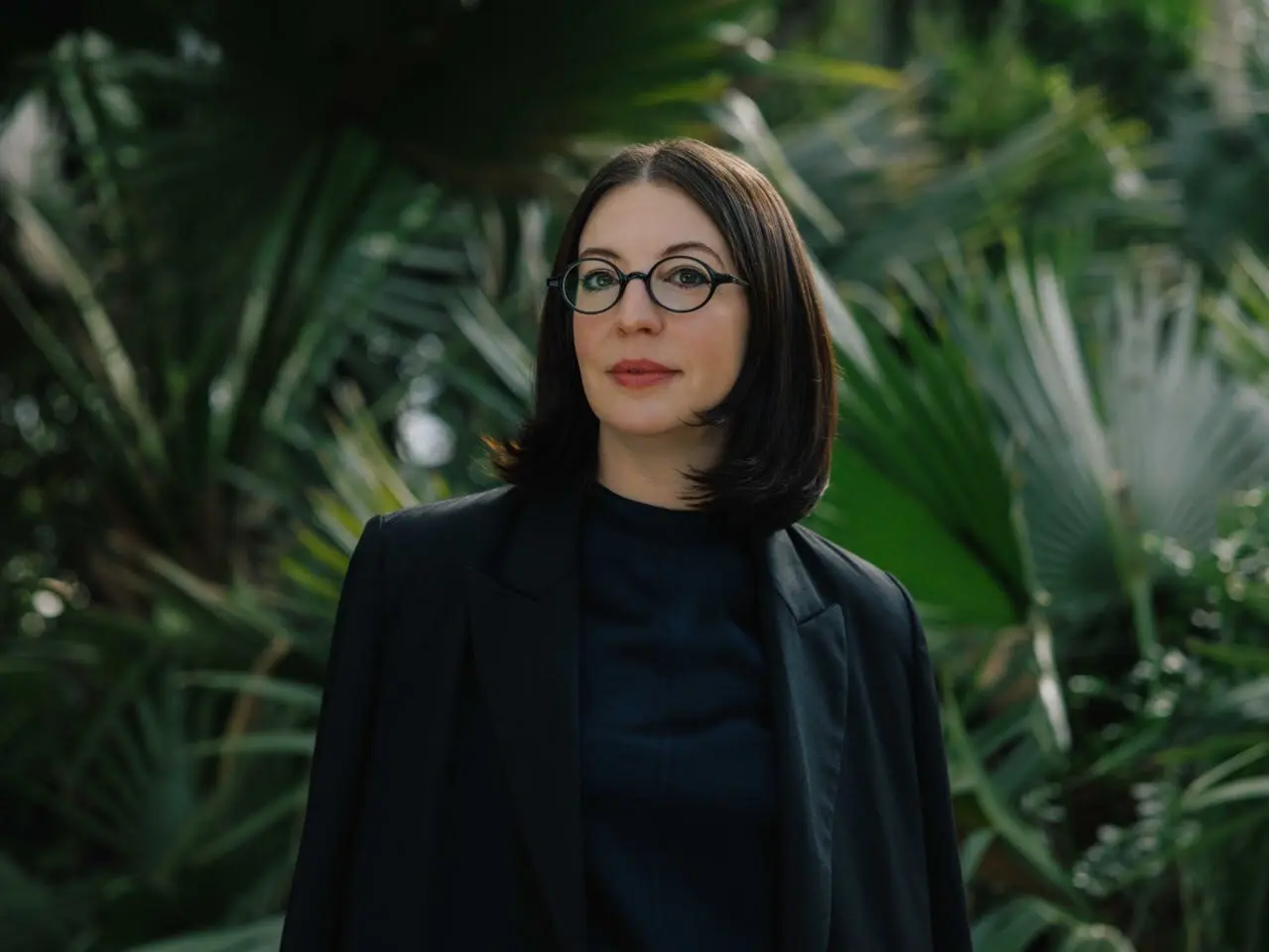
"That palpable hum of energy, people, art, light, landscapes — the whole cultural convergence — it takes your breath away," remarks Bridget Finn, Director of Art Basel's Miami Beach show. Having transitioned from the gallery world, including a distinguished tenure as partner and managing director of Reyes Finn in Detroit, Finn’s perspective is finely tuned to the fair’s magnetic draw. "It’s taken my breath away since 2006, every time I step on that show floor."
Orienting Your Aesthetic Compass
The fair is meticulously organized into six distinct sectors, each possessing a curatorial thesis that guides its selection. The Galleries sector stands as the acknowledged cornerstone, or "lifeblood," as Finn describes it, hosting over 200 galleries presenting a curated cross-section of Modern, postwar, and contemporary masterpieces. Nestled within Galleries, the Kabinett sector offers intimate "shows within a show" – miniature exhibitions delving into highly focused concepts or dedicated explorations of a single artist's oeuvre. This year, Kabinett expands its offering to 32 presentations, a notable increase from last year's 24.
A particular highlight within this section will be a selection of early paintings by the seminal Black American artist Robert Colescott, presented by San Francisco's Jenkins Johnson Gallery. These works, capturing Colescott's pivotal periods in France and Egypt, are especially significant given 2025 marks the centennial of his birth. Further enriching the Kabinett experience, the venerable Chicago institution Gray (established 1963) will spotlight a later series by Roger Brown, a key figure of the Chicago Imagists. Finn praises these works for their insightful "dialogue" between the artist's personal collections and the broader collecting community, viewing them as a "very special body of work."
Fresh Perspectives, Enduring Legacies
For those keen to discover emergent voices, the Nova and Positions sectors are prominently located at East Entrance B on Washington Avenue. This strategic placement, according to Finn, represents a conscious effort to "highlight our youngest exhibitors." Nova showcases works created within the past three years by up to three artists, while Positions provides nascent galleries (typically in operation for under a decade) a pivotal platform for compelling solo presentations by artists on the ascendant.
Conversely, the Survey sector invites a deeper temporal exploration, presenting art created before 2000. These selections often seek to re-evaluate influential figures, underscore pivotal moments in art history, or reclaim practices largely overlooked by dominant historical narratives. This year, Voloshyn Gallery, with locations in Kyiv and Miami, makes its debut in this sector, dedicating its presentation to Janet Sobel (1893-1968). A self-taught Abstract Expressionist, Sobel's drip paintings, a style she pioneered after emigrating from Ukraine and beginning her artistic journey in her 40s, famously influenced Jackson Pollock, cementing her enduring legacy.
At the southern end of the exhibition hall, Meridians will feature monumental, large-scale installations. Amongst them, Ward Shelley's "The Last Library IV: Written in Water" promises an immersive experience: a gigantic, handmade structure of tilted shelves brimming with banned books, stolen documents, and state secrets, serving as a poignant commentary on the vulnerability of the written word and, by extension, democratic ideals.
A New Digital Frontier: Zero 10
Adjacent to Meridians, Art Basel unveils Zero 10, its inaugural curated program dedicated to art of the digital era. Eli Scheinman, Art Basel’s senior adviser for digital art, elucidates: "Digital art is artwork created within a digital environment, using software, code or computational systems as its primary medium… Its essential form originates from data… and the final output… can be displayed on a screen, in print, as a sculpture, painting or within a physical installation."
The collecting world's growing embrace of digital art is undeniable; a 2025 Art Basel and UBS Survey revealed that over half of its 3,000 surveyed collectors have acquired such works, positioning it third in spending after paintings and sculptures. Yet, its exhibition presents a distinct challenge. Scheinman observes, "Too often, digital works are presented as technology demos or history lessons rather than as artworks... preventing the works from being understood as meaningful contributions to contemporary art." Zero 10 aims to transcend this by emphasizing the works' inherent artistic merit, focusing on "how wholly digital artworks... can meaningfully be legible and resonant and compelling as contemporary artworks."
Inclusions in Zero 10 are defined by the integral role of technology in their creation. For instance, artist Tyler Hobbs, showcasing new works, employs custom software to generate visual compositions, iteratively refining algorithms until they manifest his artistic vision. From thousands of these digital compositions, Hobbs has curated twelve, which he then translates into physical artworks by printing them and applying them to wood panels. Four such 4-foot-by-5-foot panels will be on view at Zero 10.
Cultivating Your Personal Journey
Vincenzo de Bellis, the Chief Artistic Officer and Global Director of Art Basel fairs, highlights several pivotal presentations. He expresses particular enthusiasm for Los Angeles' Roberts Projects, which will present Betye Saar’s specially conceived "Lost and Found," and for Turin-based Mazzoleni gallery's showcase of Cuban artist Wifredo Lam, whose retrospective at MoMA de Bellis describes as "mind-blowing."
De Bellis, who oversees all of Art Basel's global endeavors, characterizes the Miami Beach edition as "the most outward-facing and probably the most culturally hybrid of all our shows," a locale fostering "the most sense of openness and discovery." This effervescent atmosphere is fueled in part by the 49 first-time participating galleries and the prevalence of new works making their debut. "We tend to forget, among the noise that these big events create, that artists are making work specifically for the fairs," he notes, emphasizing that many artists choose these fairs to launch new series and ideas.
To fully appreciate the temporal freshness of the fair's offerings, de Bellis advises attendees to scrutinize the creation dates on identification labels. And for those new to collecting, his counsel is clear: "If there’s one thing that I would suggest for casual collectors, first-time buyers, it’s always not to be ashamed or shy about asking questions." Engaging with the art, and those who shepherd it, is paramount.
For those planning their visit, single-entry tickets are priced at $88, with discounted entry of $68 available for students, individuals aged 13-18, veterans, seniors, and Miami Beach residents. While exit is final, the show floor offers a sophisticated array of culinary refreshments, from Mexican cuisine and sushi to a classic pairing of oysters and Champagne, ensuring refreshment for both the mind and the palate.