The Fold That Changed Everything
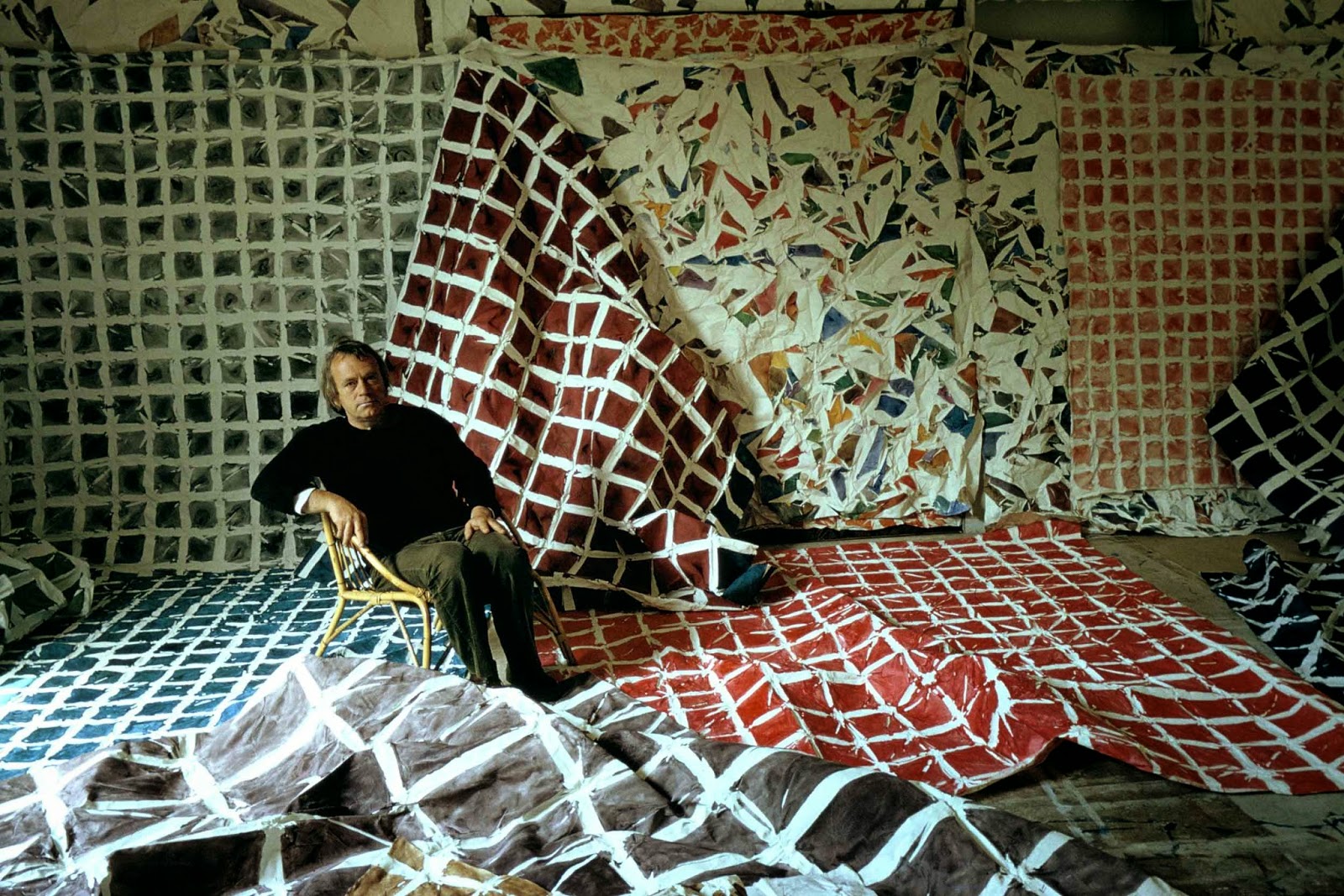
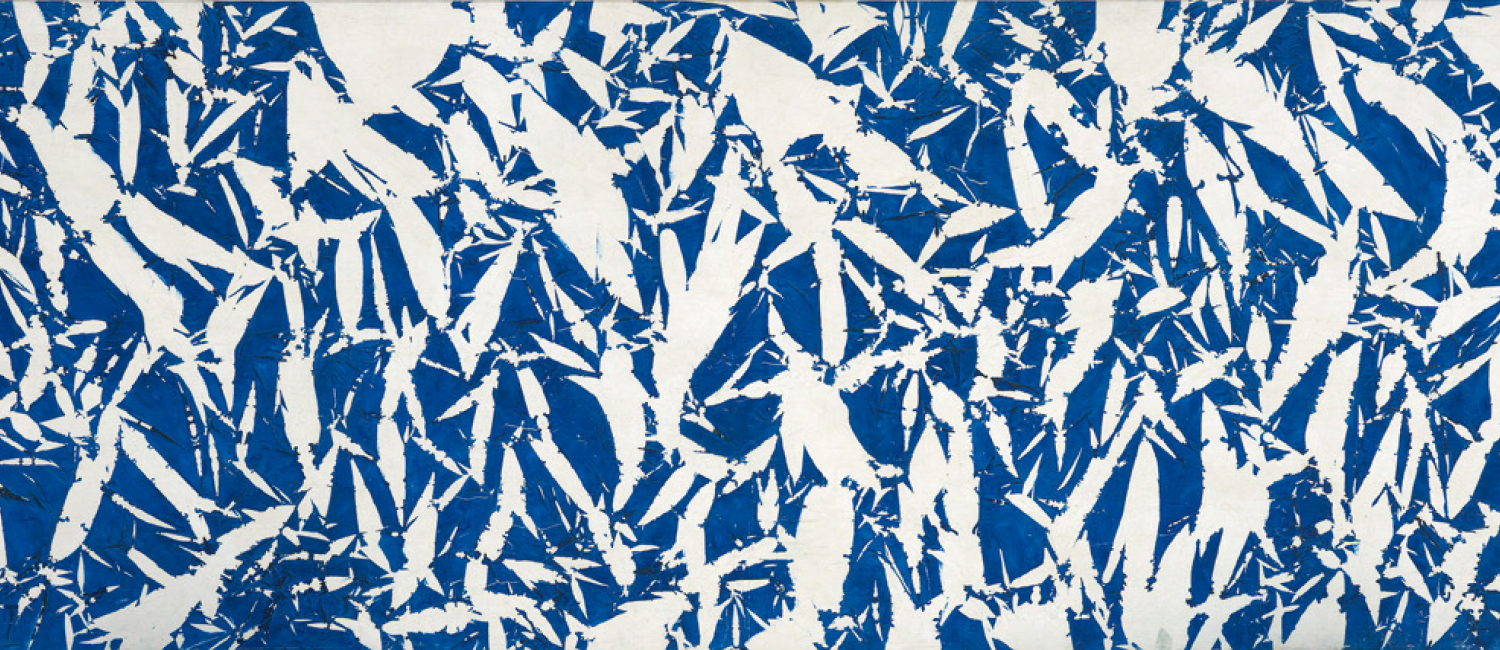
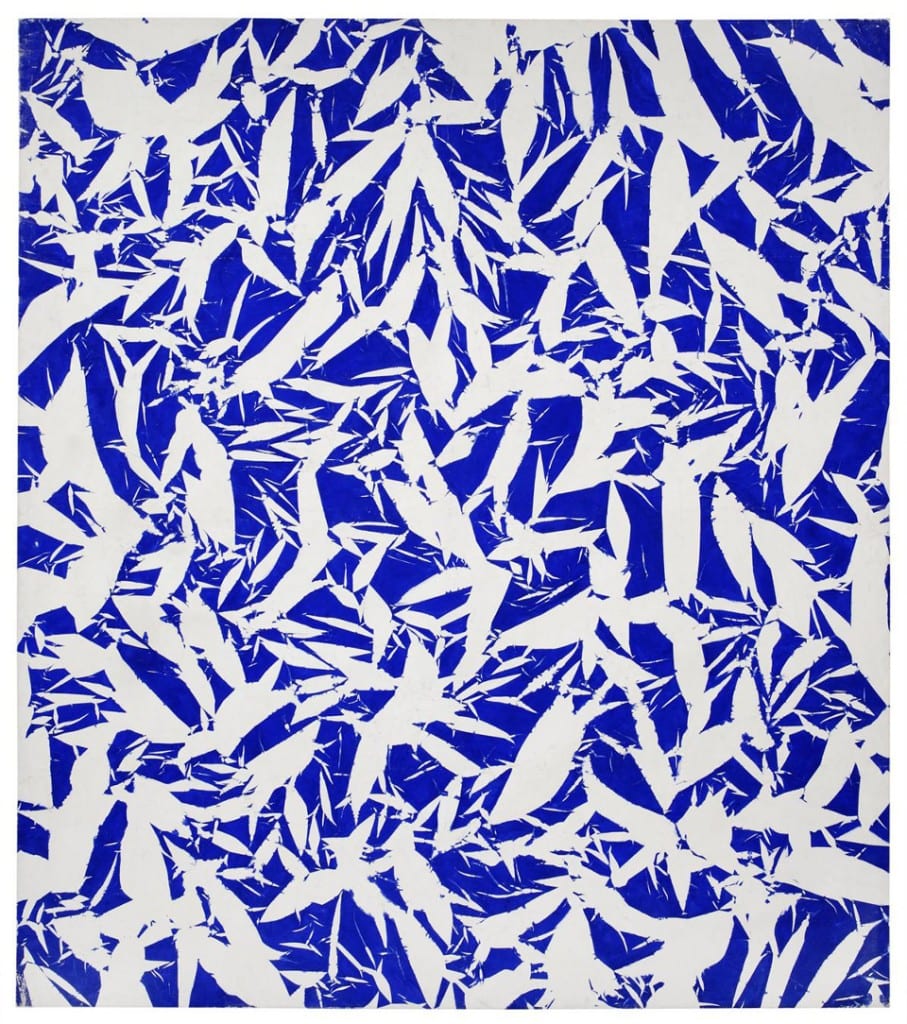
Sometime in 1960, Simon Hantaï did something that sounded almost domestic. He crumpled a canvas, knotted it like laundry, painted over the bunched mass, then opened it up. What appeared looked like nothing he—or anyone—had made before: saturated color broken by white voids where folds had shielded raw cloth. He called it pliage, French for folding. Simple in description. Unforgiving in practice.
He was thirty-seven and already a veteran of reinvention. Born in Biatorbágy, Hungary, in 1922, he trained at Budapest's School of Fine Arts during the war, publicly denounced Nazi collaboration in 1944, joined the Communist Party in 1946, then left Hungary on foot with his wife, Zsuzsa, in 1948. They passed through Italy; the Byzantine mosaics in Ravenna's Galla Placidia mausoleum lodged in his memory. By 1949, they were in Paris.
Paris was arguing about abstraction—hot versus cold, gesture versus geometry—and Hantaï tried it all. Grattage, frottage, dripping, decalcomania. He scraped paint with the casing of an old alarm clock. He left an unsigned painting-object on André Breton's doorstep like an orphan, and Breton—the pope of Surrealism—displayed it, then gave Hantaï a solo show in January 1953. For a moment, Hantaï was a Surrealist.
Then he saw Jackson Pollock. The drip paintings—canvas on the floor, paint flung from above—proved abstraction still had oxygen. Hantaï tried to tell Breton that Surrealist automatism and Pollock's action painting were kin. Breton refused. Hantaï wrote his letter of rupture in March 1955. Thirty-two years old. Starting over.
A Method, Not a Style
Pliage wasn't a trick; it was an argument. Fold the canvas first, and authorship slips. You can't fully predict what will appear when you unfold it. Chance enters, but not as chaos—chance disciplined by cloth, gravity, and the simple fact that some areas remain unreachable to the brush.
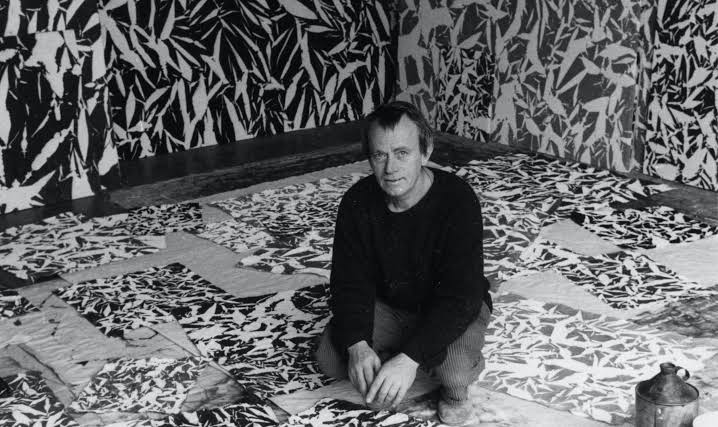
He worked in series, each governed by its own folding protocol. The Mariales (1960–1962) produced forms that recalled the Virgin's cloak in Renaissance painting—hence the name. The Catamurons (1963–1964) tightened the knots, compressing the pattern. The Meuns (1967–1968), named for the village in the Forest of Fontainebleau where he lived in deliberate isolation, grew enormous—some beyond twenty feet. They had to be painted on the floor, Pollock-style, because no wall could hold them during the process.
With the Études (1969), the ground asserted itself. White stopped reading as absence and became presence. "My true subject," Hantaï said, "the resurgence of the ground underneath my painting." The canvas—its weave, its refusal of pigment in folded zones—became as charged as the color.
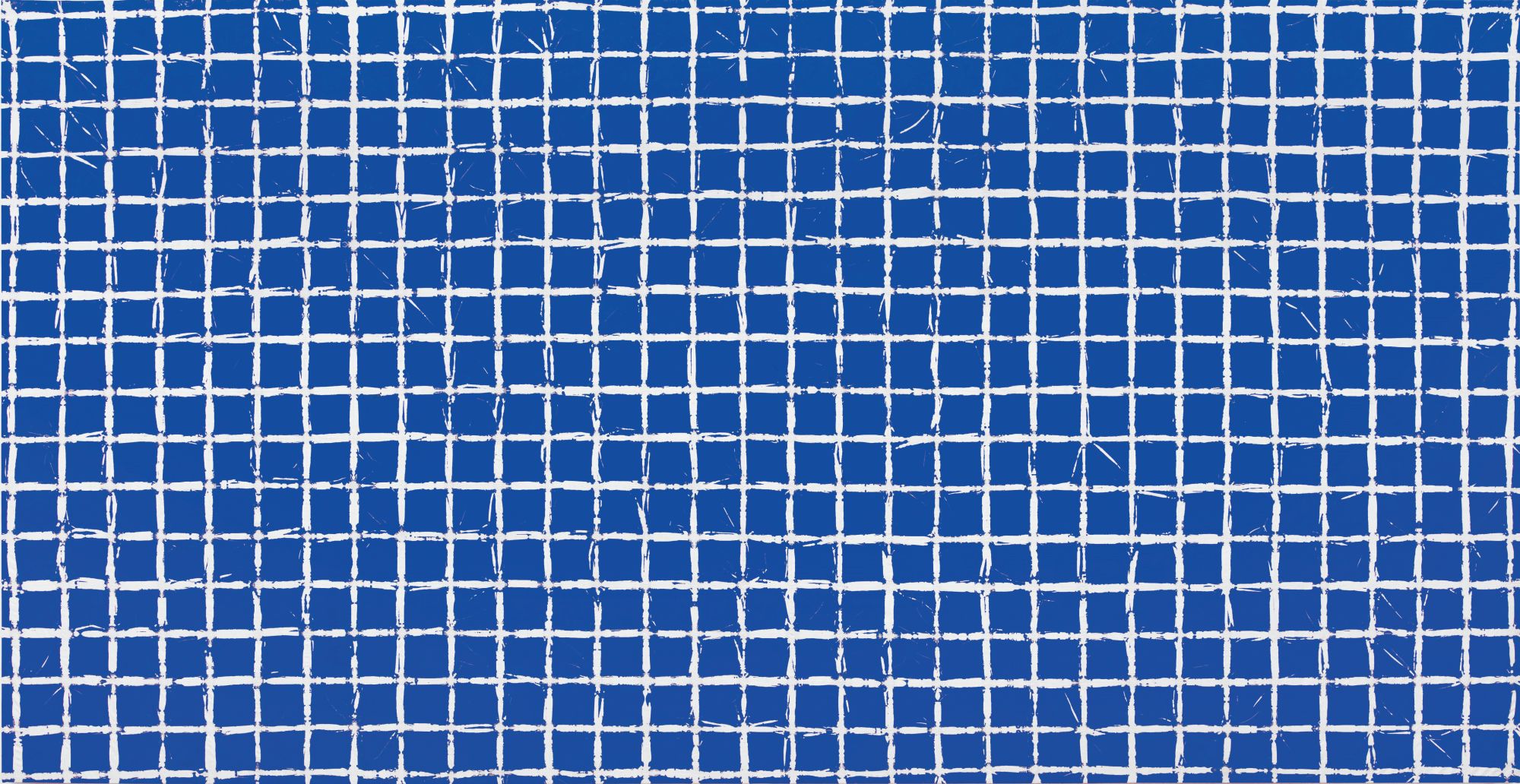
By the time he reached the Tabulas in the mid-1970s and early 1980s, discipline took over. Repeated folds formed grids, almost monastic. Color seeped into geometric cells like light through stained glass.
Recognition followed. France awarded him the Grand Prix National des Arts Plastiques in 1980. Two years later, eighteen Tabulas represented France at the Venice Biennale. He was sixty, and fully visible.
Then he disappeared.
The Long Silence
At the height of attention, Hantaï chose refusal.
After Venice, he stopped exhibiting. Not painting—he kept working, alone, in his studio—but showing. For sixteen years, from 1982 to 1998, he kept the art world at arm's length: no gallery shows, no museum retrospectives, few public statements.
He never fully explained why, but the timing reads as disillusionment. The 1980s market boomed; prices rose; speculation hardened. Hantaï, who had walked out of Communist Hungary and broken with Surrealism over principle, had little patience for commerce posing as culture. "The art world," Jerry Saltz once wrote, "is a great broken beautiful family of misfits whose motivations are buried under loads of external bullshit." Hantaï seems to have reached a similar conclusion—and acted on it.
He didn't vanish entirely. Late in the 1990s, he worked with Anne Baldassari on an unrealized stained-glass commission for the Cathédrale Saint-Cyr-et-Sainte-Julitte in Nevers. The project, which would have paired him with Sam Francis, pushed him toward transparency: glass layered with different refractive indexes, generating color without pigment, grounded in optical principles Goethe described in 1810. The windows were never made, but the research sharpened his thinking about light and absence.
At seventy-five, he returned for a single exhibition—Laissées et autres peintures—at Renn Espace in Paris. The title means "leftovers" or "remainders," the word a painter might use for scraps trimmed from a canvas edge. He framed the work as secondary, incidental. The show suggested something else: he had never stopped.
What the Market Learned
Hantaï died in Paris on September 12, 2008. He was eighty-five. His sixteen-year withdrawal had kept prices low—auction records can't build without supply—while insulating the work from overexposure. Collectors who bought in the 1970s and early 1980s held on. Supply stayed tight.
After his death, institutions moved first. The Centre Pompidou, already holding significant works from a 1976 retrospective and later donations, mounted a major survey in 2013. The Fondation Louis Vuitton followed in 2022 with a centenary exhibition of more than 130 paintings, many never previously shown. The message settled: Hantaï wasn't a footnote in postwar European abstraction. He was central—a bridge between Pollock and what came after.
Prices followed. A 1973 Meuns pliage, 220 by 180 centimeters, sold at Sotheby's Paris in October 2023 for $2.8 million. A 1980 Tabulas, white on white, brought €1.9 million at Christie's Paris in June 2024. Smaller works—gesturals from the 1960s, studies, pieces under 150 centimeters—trade in the $200,000 to $500,000 range, appearing at auction quarterly. The climb has been steep: roughly 15 percent annual appreciation since 2020, strongest for the large pliages that define his achievement.
Gagosian now handles the estate globally. Mnuchin Gallery in New York and Olivier Malingue in Paris represent historical works. Authentication runs through the Comité Hantaï and the estate website, simonhantai.org, which maintains exhibition checklists and a biography compiled with scholarly care. Fakes are rare—the folding technique is difficult to counterfeit convincingly—but early Surrealist-period works demand closer scrutiny.
What Separates Good from Great
For collectors, the question isn't whether to buy Hantaï. It's which Hantaï.
Scale commands premiums. A Tabulas under two meters sells; a Tabulas over 2.5 meters commands multiples. Partly practical—museums want impact. Partly aesthetic. The grids gain force as they expand, repetition turning into rhythm in ways smaller works can't sustain.
Condition matters more than usual. Folding stresses canvas. Creases that were once soft can crack over decades, especially if stored improperly or stretched too tightly. Look for even tension, no flaking along fold lines, no discoloration where pigment meets raw cloth. Works on unprimed canvas—most mature pliages—are more vulnerable than those on prepared grounds.
Provenance from Galerie Jean Fournier, Hantaï's longtime Paris dealer, or the Pierre Matisse Gallery in New York carries weight. So does inclusion in the 1976 Pompidou retrospective or the 1982 Venice Biennale. Works that stayed in the studio until his death—the "leftovers" he kept—are beginning to surface through the estate and tend to fetch premiums as evidence of his private judgment.
Entry-level pieces exist. A 1960s mid-size pliage in good condition can be had for $400,000 to $800,000, a price point offering both aesthetic reward and liquidity. But the market's center of gravity is moving upward. Institutional acquisition has thinned supply at the top. French export restrictions on pre-1980 works—verify any purchase carefully—complicate cross-border sales.
Hantaï withdrew because he believed the art world had lost its way. The irony is that his absence made the work more valuable once he was gone. The paintings don't care. They hang on the wall—color and void, painted and unpainted—the fold still visible, if you know where to look.